
The southern New Zealand dotterel population has surged by 52 percent following a successful aerial predator control operation on Stewart Island.
The annual bird count at Southland beaches last week revealed the dotterel population has grown from 105 in April last year to an estimated 160 - the biggest annual increase since recovery efforts began 32 years ago.
DOC Stewart Island Operations Manager Jennifer Ross says it's a huge boost for everyone supporting the critically endangered shorebird.
"After years of small gains, and more commonly, devastating losses, this is the result we needed to help save southern dotterels from extinction."
An aerial predator control operation by DOC and Zero Invasive Predators in winter made the difference, showing once again how vital 1080 is in the conservation toolkit alongside traps and bait stations.
"We managed to reduce feral cats to very low levels in the operational area. This protected adult birds while they nested and raised their chicks on the mountain tops," Ross said.
"The timing was critical as the dotterel population had rapidly declined from 176 in 2020 to 105 in 2025."
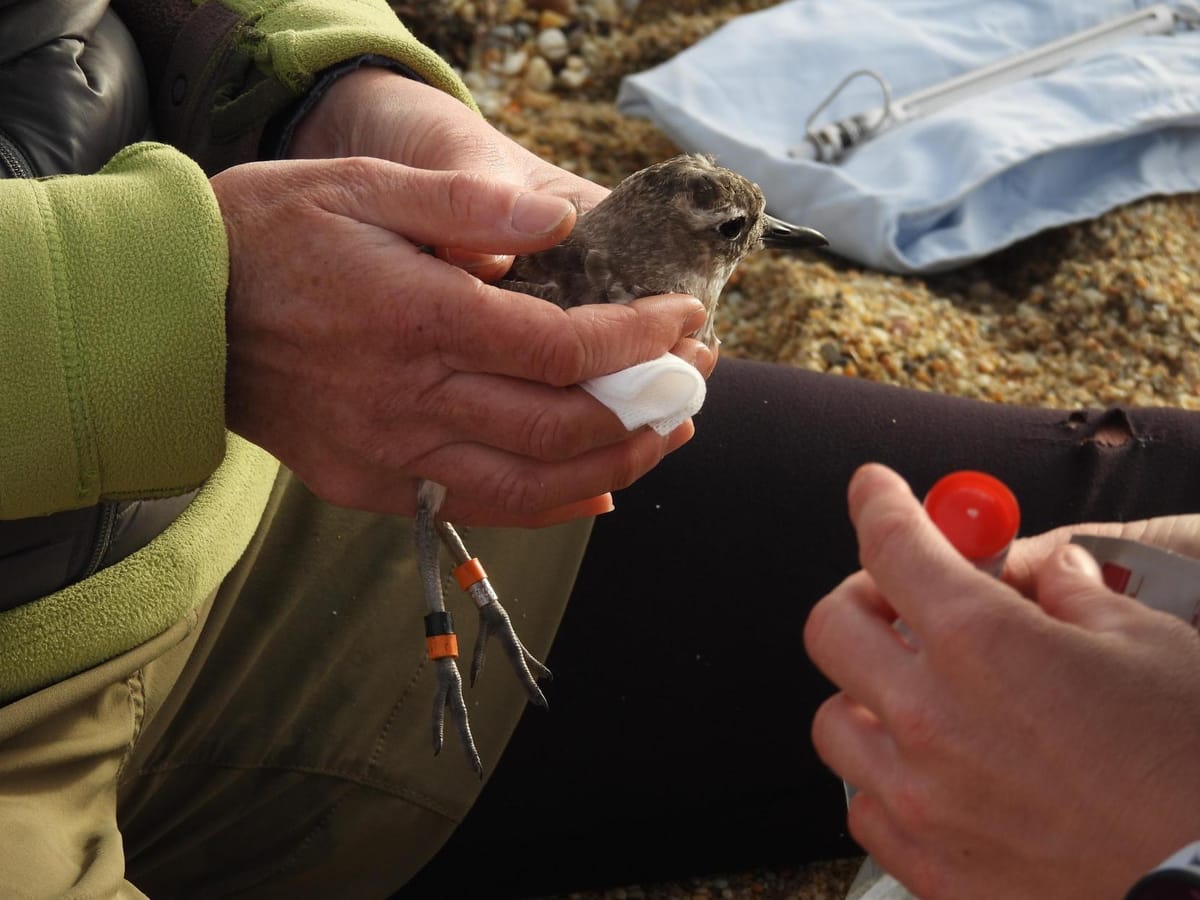
Ninety-one out of 97 previously known adult birds survived along with 56 newly banded juveniles, one new adult, and five unbanded birds.
"In recent years, we've lost up to 40-50 adult birds to feral cat predation. Males are particularly vulnerable as they incubate the eggs overnight when feral cats are more active."
"A lot more birds have been able to pair up this season, and in some cases, they've hatched three chicks in one clutch."
Despite the positive results, the birds remain far from safe, says Dean Whaanga, a member of the leadership group involved in Predator Free Stewart Island.
Trail cameras have detected feral cats at the edges of the operational area, and they are present at breeding sites elsewhere on the island.
"It's critical we continue to take action, not just for dotterels, but to uplift the life force of Stewart Island and enable other precious species like kakapo and saddleback to safely return," Dean says.
While feral cats remain on the island, dotterels will always be under threat, Ross warns.
"Until we can eradicate feral cats and other predators from Stewart Island, we will have to hold the line using the best predator control tools at our disposal."
While there isn't an aerial predator control operation planned on Stewart Island this year, feral cats will continue to be closely monitored.
"The big question is how long it will take feral cats to reinvade dotterel breeding sites in the operational area," she says.
The trapping and bait station network is being expanded across Stewart Island with help from donations through the New Zealand Nature Fund and RealNZ.
Ross says while not everyone is able to protect dotterels on the ground, there are other ways people can get involved in conservation efforts.
"Actions like supporting local trapping groups and donating to wildlife recovery projects across the country."
The Southern Dotterel Recovery project aims to increase the population to at least 300 by 2035.