
News
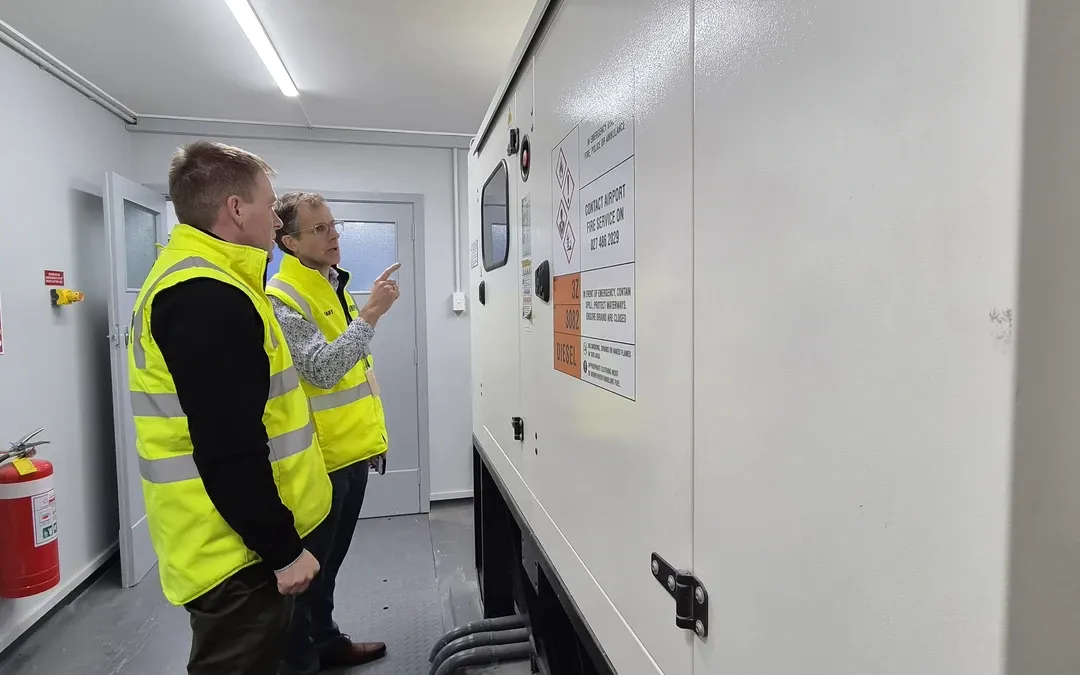
Invercargill Airport deliberately cut its own power last month to find out what would happen. The answer, it turns out, was worth knowing.
The airport ran a planned blackout exercise, pulling mains power from the terminal, control tower and Airport Fire Service to test how critical systems switched to generator power and how long they could keep running. It was scheduled during a quiet period for flights and passengers — a deliberate choice in case something didn't perform as expected.
Chief executive Stuart Harris said having backup systems isn't the same as knowing they work. "You can have plans, generators and backup systems in place, but you need to test them. An airport is an important piece of regional infrastructure, and we need to understand what happens when something we normally rely on is suddenly unavailable."
Specialist electrical contractors worked alongside the airport team during the exercise, observing how systems performed and tracking diesel consumption. That data matters — it tells the airport how long essential operations could actually continue if the power stayed off.
For Harris, that's the point. "Preparedness is about knowing where your pressure points are before you are under pressure. Exercises like this give us real information that we can use to improve our planning and make informed decisions about where we invest."
Testing is already routine at the airport. Emergency and operational scenarios are run regularly to assess procedures and find gaps. The Airport Fire Service runs every day of the year, responding to aircraft, medical, fire and hazardous substance incidents.
Airport Fire Service crew chief Corey Diack said no amount of paperwork replicates the real thing. "Training gives us the chance to find the things we might not see during normal operations. We want to know what happens when the power disappears, what keeps working and what we need to think differently about. That learning makes us better prepared if we ever face the real thing."
The exercise will now be reviewed, with the data fed into future resilience planning.
Harris was matter-of-fact about why it matters. "Southland relies on its airport. Our job is to think ahead and make sure we are prepared for the things we hope never happen."