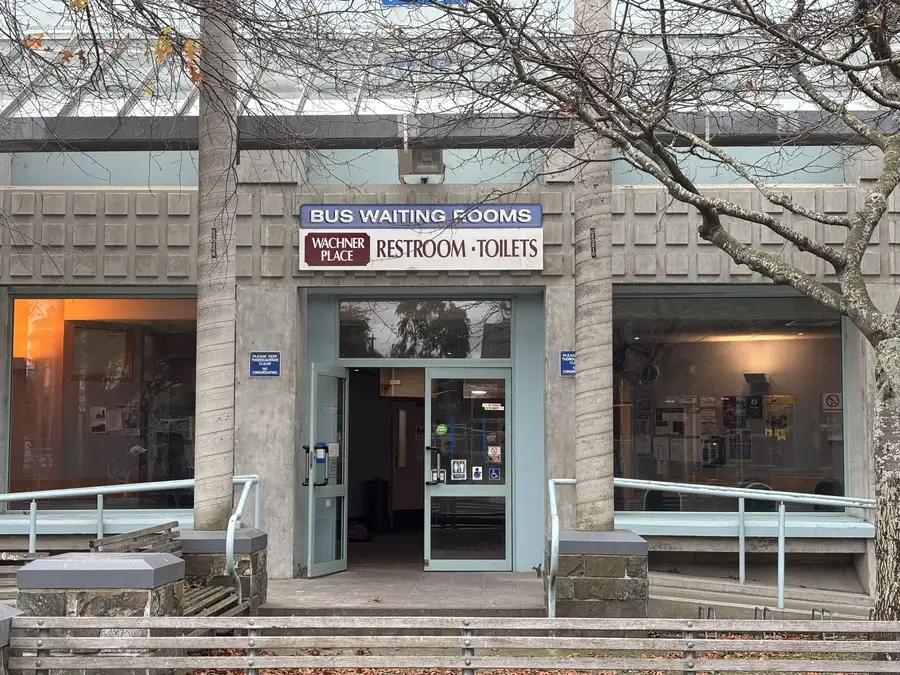
A free public shower facility in Invercargill will remain open until at least March 2026, despite high operating costs and questions around its long-term future.
Located in the central city’s Wachner Place, the facility includes a restroom and free shower service that is used, on average, twice a day. With annual costs sitting at $194,294, each use is estimated to cost the council about $270.
Originally set to close by August 2025, the restroom has been given a seven-month extension after the council failed to find a suitable alternative. The original decision in May was made on the condition that replacement options would be explored.
Council policy analyst Hannah Kennedy told elected members the facility provided more than just hygiene. “In other words, having a friendly face, somewhere that was warm, safe, private. Someone to have a chat to and make you a cup of tea, were very much appreciated as much as the showers.”
She said many homeless people valued the space to store belongings during the day and to maintain hygiene, especially while job-seeking.
Former councillor Lesley Soper, who led public engagement efforts, said most users of the shower were not long-term homeless. Instead, they were often people dealing with temporary issues like losing access to water or power, or travellers passing through.
She confirmed the shower was used about 60 times per month, or twice per day, at a significant cost.
Councillor Ian Pottinger, who visited the facility for the first time this week, backed its continuation. “I believe council has a responsibility to provide a facility like this,” he said.
A council report highlighted that, while there is no formal count of the city’s homeless population, most service agencies believed the situation was getting worse. The need for a larger facility offering overnight accommodation has also been raised.
Council manager Doug Rodgers said his team was now working on a range of options, from basic facilities to a community or tourism-focused hub, with cost estimates expected in February.
While the future remains uncertain, the council has made it clear the current set-up, though costly, is meeting a very real need in the community.
Share this article
The link has been copied!
Your link has expired. Please request a new one.
Your link has expired. Please request a new one.
Your link has expired. Please request a new one.
Great! You've successfully signed up.
Great! You've successfully signed up.
Welcome back! You've successfully signed in.
Success! You now have access to additional content.