
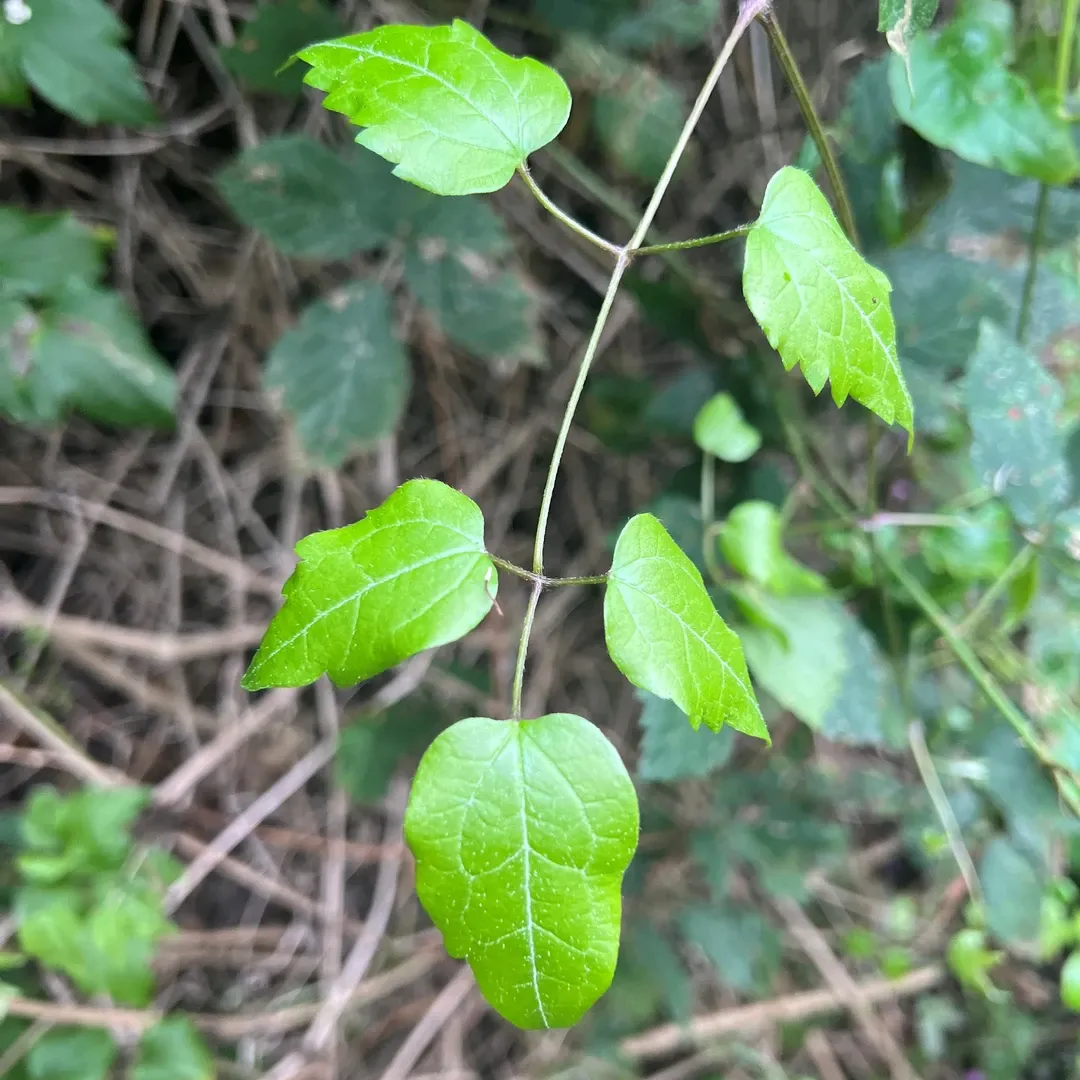
A staff member's sharp eyes have turned up a new Old Man's Beard infestation near Dipton — and Environment Southland wants residents to start looking on their own properties.
The invasive vine was spotted by an Environment Southland employee during routine work. The site has since been treated with aerial spraying, with ground-level follow-up planned for the coming months.
Old Man's Beard is a deciduous climbing vine that can reach 20 metres and is identifiable by its fluffy, beard-like seed heads. Unchecked, it smothers and collapses trees, turning native forest into a tangle of weed.
Environment Southland team leader biosecurity plants Jolie Hazley said the find was a prompt for all Southlanders to take a closer look around them.
"This Old Man's Beard find shows how important it is to keep an eye out for invasive pest plants. Winter is also a good time for Southlanders to check their properties for other pest plants, including German ivy and smilax," Hazley said.
Both are worth knowing. German ivy — a perennial climbing vine with broad, star-shaped leaves — is already established in parts of Southland, including Stewart Island and Bluff, and is easier to spot right now because of its distinctive yellow flowers. Smilax, a wiry-stemmed vine with oval leaves and bright red berries, has a small number of known sites in Southland that are under active control.
"German ivy is already present in parts of Southland and is currently easier to spot because of its distinctive yellow flowers. We have a few small sites of Smilax in Southland that are under control but would like to find more as we are trying to eradicate both of these plants from Southland," Hazley said.
Eradication is the goal for both species. That only works if new sites are caught early.
"The sooner people report suspected sightings, the better chance we have of protecting Southland's precious native ecosystems," Hazley said.
Anyone who thinks they've spotted Old Man's Beard, German ivy or smilax can call Environment Southland on 0800 76 88 45 or email [email protected]. The Environment Southland Pest Hub and the iNaturalist phone app can help with identification.