
"I am more of a funeral kind of man than a wedding kind of man."
These were the opening lines of my dad's speech at my wedding — true story!
As we waited with bated breath for the speech to unfold, it was either going to be very funny… or diabolical.
Wedding speeches aside…
Funerals bring up a lot, don't they?
They cause us to reflect upon life.
As I sat at the back of a recent memorial, I became curious.
Curious about tears.
And what those tears were really about.
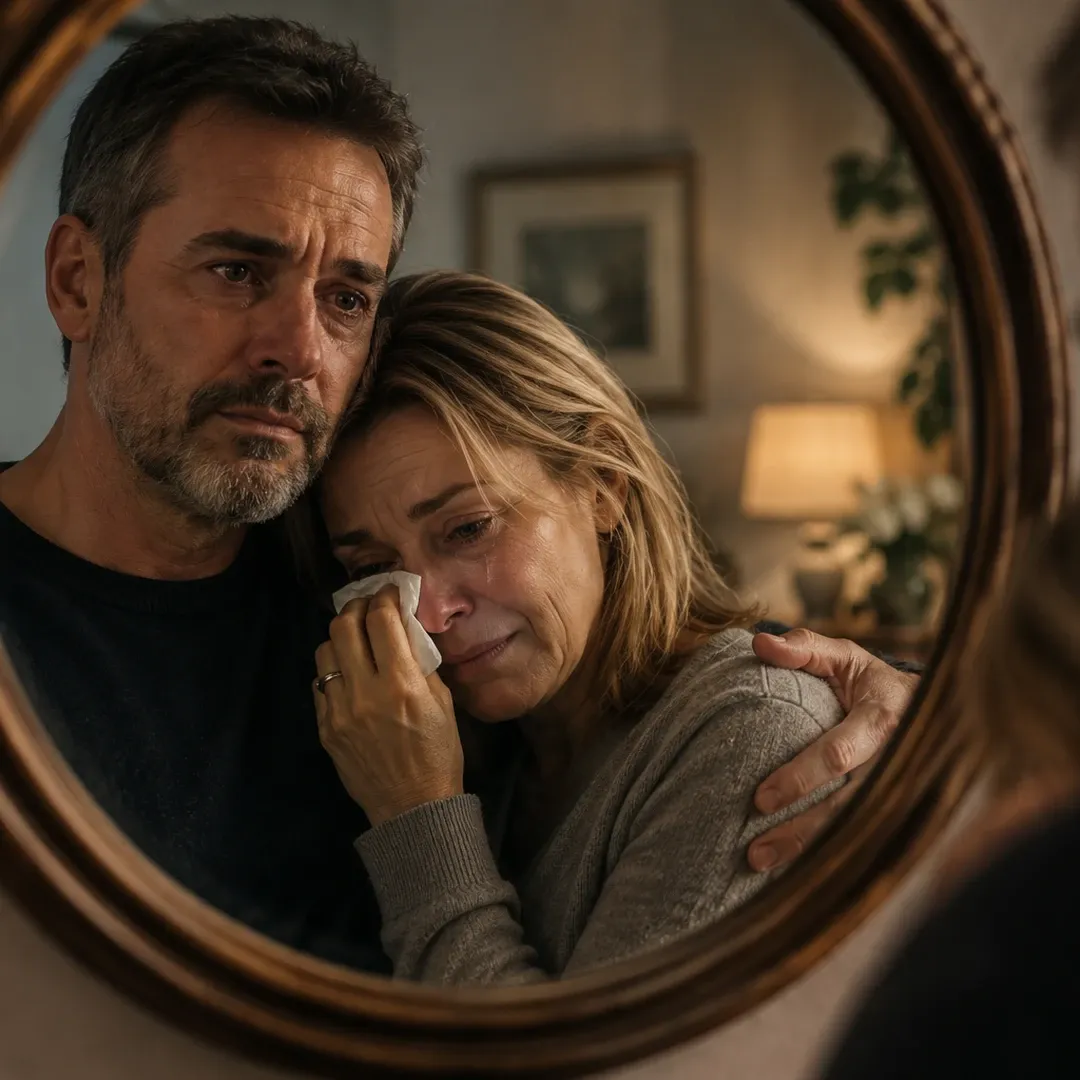
For those who were close to the loved one who has passed, they may be releasing the pain caused by their absence and the gap they will leave in their lives.
For some, the grief is deeply painful and consuming, and the thought of life without them feels unbearable.
Yet there are many reasons for tears.
Perhaps there's regret for not taking the chance to repair a relationship while they were alive.
Or regret for not making the most of their own life.
A reflection of what their life has been, and whether it has matched their own expectations or not.
Perhaps lingering resentments and family dynamics surface as old faces appear that you never wanted to see again.
Some of my tears at the recent memorial rolled for my boys.
The fear that they could become one of those families who stop speaking to one another. That one day one of them might be cut out of a will, or conflict could erupt over the fairness of distributing assets left behind, truly breaks my heart.
Currently, we are navigating some, at times, ferocious sibling conflict amongst our five boys, aged four to fifteen.
Most of it revolves around fairness. Fairness of screen time, who got the most crisps, who ate the last biscuit, and who had more one-on-one time with Mum and Dad.
The oldest children often feel they do more than their fair share, that higher expectations are placed upon them, and that the younger ones get away with more. Their needs can be missed because they are expected to fend for themselves.
Meanwhile, the younger ones can feel deprived because the older boys get more freedom and opportunities. And the more easy-going personalities can be overlooked while their more demanding brothers require greater amounts of time and attention.
At different moments, everyone ends up feeling resentful, hard done by, or disappointed.
But the fear within me feels very real.
I hope they are "lucky" enough to be at our funeral one day — meaning we pass before our own children — and I wonder: would they fall out? Or would they be able to navigate one of life's most stressful times with grace, compassion, and understanding?
I truly hope so.
A person's passing can bring out the worst in family dynamics when it comes to sorting things out, often reflecting the same childhood patterns that existed amongst siblings during their younger years.
As my boys grow, I am noticing how the dynamics between them are changing.
How their nervous system responses determine whether they fight and defend, freeze and bury their heads in the sand, flee and disappear, or resort to people-pleasing while quietly building resentment.
I am also noticing how the beliefs they hold about themselves and others are forming the lenses through which they see the world, and inevitably react to something their brother may or may not have done.
My tears flowed because I wondered whether I am doing a good enough job as a parent. Am I showing my boys how to work through disagreements and conflict in ways that are respectful and healthy?
Ways that have a deep understanding of each other, communicating with compassion whilst also having healthy boundaries that protect themselves rather than enabling or tolerating unhelpful behaviour.
I hope they can each express their emotions knowing they are welcomed and supported by each other, rather than dismissed or shut down.
Tears flow for many reasons.
Some are welcomed.
Some are desperately held back.
Some are hidden.
Some people can sit comfortably with emotions, while others desperately try to make them disappear through distraction or dismissal, simply so they can feel okay in themselves again.
How our needs were met, and whether our emotions were nurtured or not as children, shapes our attachment style.
That attachment style influences how we relate to others, whether functionally or dysfunctionally, and how we support ourselves and those around us through emotional times.
It can help explain why some people are more likely to dismiss or suppress emotions, feel and express them deeply, find unhealthy ways to cope with them, or become overwhelmed and consumed by them.
I'm a believer in naming the emotion and saying it out loud for someone.
That can help people feel seen, heard, and understood. It can build deep connection and empathy.
For others, particularly those with more avoidant attachment styles, this can feel incredibly uncomfortable.
Their way of coping with big emotions is often to cover them up or suppress them through busyness, distraction, or familiar coping strategies such as overworking, scrolling, eating, drinking, smoking, shopping, gambling, sex, or drug use.
Often this comes from not wanting to appear weak or vulnerable, and from a fear that saying the emotion out loud will somehow make it bigger, worse, or harder to bear.
Bringing understanding to our attachment styles, emotional coping patterns, and nervous system responses can eliminate the expectation that others should think, behave, and react as we do.
In turn, this creates more connection, compassion, and understanding, rather than blame, criticism, and disconnection.
No matter why our tears fall, or what kind of life someone has lived, they have lived a human experience.
And humans are humanly imperfect. Just like myself and my dad.
I often wonder how I will feel at his funeral one day.
One thing I do know is that I will always remember that wedding speech with great fondness — and a HUGE amount of relief.
What could have been deeply embarrassing or uncomfortable turned out to be one of the funniest speeches I have ever heard.
If we could live every day like it was our last, rather than taking for granted that we have another year, ten years, or decades to live, I wonder how differently our day-to-day decisions and priorities would be.
What would we do more of?
What would we let go of?
And who would we choose to spend our precious time with?
Because one thing is certain: life is impermanent, and we never know when our time here will end.
And when it does, most people won't be talking about the size of your house, the balance of your bank account, how tidy your home was, or reminiscing about your never-ending to-do lists.
They will remember how you made them feel.
KATIE OLIVER
Founder of True in Nature Bush School | Attachment Parent, Family and Relationships Coach