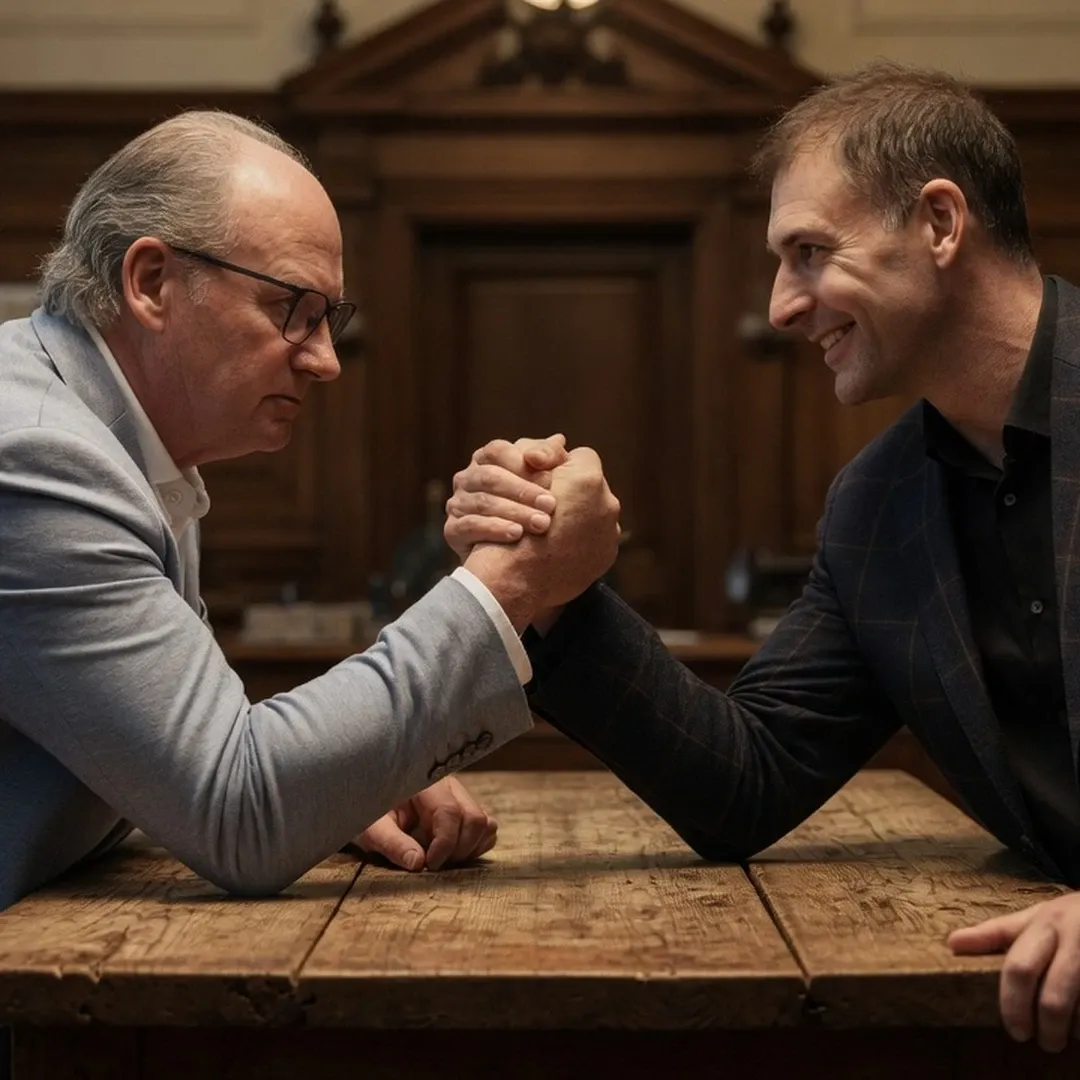
Invercargill Mayor Tom Campbell says his council cannot accept Southland District Council's two-council model because it would separate the city from the Oreti catchment. Scott argues his two-council model would allow both councils to focus on their communities' specific needs while collaborating on shared resources like the Oreti through dedicated catchment governance arrangements. Photo: whatsoninvers.nz / GROK
Invercargill and Southland mayors are clashing over how the Oreti River should be managed under proposed council reforms, with both citing the waterway as crucial to their preferred governance models.
Invercargill Mayor Tom Campbell says his council cannot accept Southland District Council's two-council model because it would separate the city from the Oreti catchment. Under SDC's proposal, the catchment would be managed by a rural council combining Southland District and Gore District.
"The Oreti catchment would need to be part of any unitary council which includes the City," Campbell said. "That is not SDC's model, which includes the Oreti catchment in the Rural Council." Read: Invercargill Mayor Tom Campbells full Facebbok post.
Campbell argues the river's management is critical to Invercargill because the city draws drinking water from the Oreti, flood risks depend on its management, and the health of New River Estuary relies on what flows from the headwaters to the sea. The river system spans approximately 170 kilometres from its headwaters in the Takitimu Mountains to its mouth at the New River Estuary.
The two-council model would disestablish Environment Southland and split its functions between an Invercargill unitary council and a rural council covering Southland District and Gore District. This restructuring would fundamentally change how regional environmental management operates across the province.
Southland District Mayor Rob Scott disputes Campbell's reasoning, saying catchment management doesn't require governing Southland as one council.
"The Oreti already sits within a single catchment management framework today through Environment Southland, yet Southlanders continue to have robust discussions about water quality, flooding and environmental outcomes," Scott said. Read: Southland Mayor Robb Scott Facebook post.
Scott argues his two-council model would allow both councils to focus on their communities' specific needs while collaborating on shared resources like the Oreti through dedicated catchment governance arrangements. He suggests existing collaborative frameworks prove separate councils can effectively manage shared water resources.
"What is the best way to ensure everyone connected to it has a fair say in its future?" Scott asked.
Campbell supports the One Southland model, which would create a single council managing all four key regional river catchments - the Waiau, Aparima, Oreti and Mataura. He says this approach offers greater cost savings and efficiency than the two-council alternative.
The debate highlights fundamental disagreements about whether urban and rural communities should be governed separately. Campbell argues the One Southland model rejects the idea that urban and rural Southlanders are fundamentally different, while Scott's model recognises different community needs and priorities across the diverse regional landscape.
Both mayors agree the Oreti River flows through the entire region and requires collaborative management, but they differ sharply on the best governance structure to achieve this. The dispute reflects broader tensions about balancing unified regional management with local community representation in the proposed reforms.
Share this article
The link has been copied!
Your link has expired. Please request a new one.
Your link has expired. Please request a new one.
Your link has expired. Please request a new one.
Great! You've successfully signed up.
Great! You've successfully signed up.
Welcome back! You've successfully signed in.
Success! You now have access to additional content.