
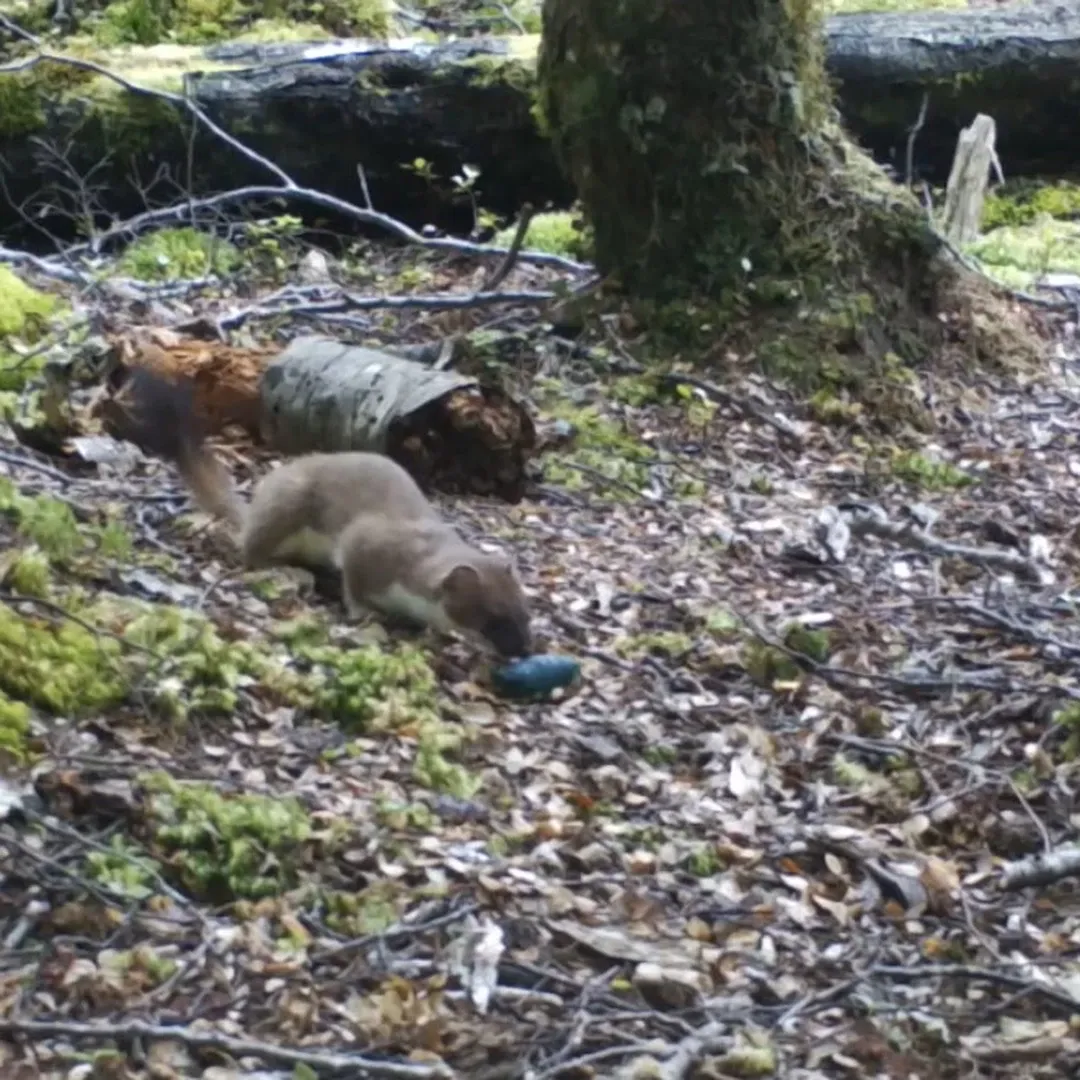

A new sausage bait designed to target stoats has shown impressive results in field trials, offering hope for protecting kiwi and other native wildlife.
The Department of Conservation has been working with pest control developer Connovation for nine years to develop a ready-made bait containing the toxin PAPP (para-aminopropiophenone), which specifically targets stoats.
Stoats are considered relentless killers of native birds, bats and other wildlife, and are the main cause of kiwi population decline on the mainland. They're on the target list for New Zealand's Predator Free 2050 programme.
DOC Principal Science Advisor Elaine Murphy led the development and says recent field trials were very successful.
"Over the past three years we've carried out two hand-laid trials and two aerial trials using PAPP sausage baits in the Borland valley in Fiordland National Park, which regularly has high stoat numbers but few rats," Murphy said.
"All the trials were very successful. Stoat detection was reduced by more than 95 per cent in the treatment areas following the hand-laid bait application and no stoats were detected in the treatment areas after the two aerial trials."
The results are particularly impressive given the low bait density used - just one bait per 4-8 hectares in hand-laid trials and one per hectare in aerial trials.
The first two trials involved hand-laying baits over about 1000 hectares of forest. A prefeed of non-toxic baits was used to attract stoats, followed by two rounds of PAPP bait a week apart.
Later aerial trials covered 2,000-4,800 hectares with one non-toxic prefeed and a single application of PAPP bait. Researchers monitored stoats before and after operations using trail cameras and tracking tunnels.
Current stoat control methods are limited to labour-intensive trapping and aerial 1080 operations that rely on stoats eating poisoned rodents.
"It's taken many years to develop and test this sausage bait but it's now showing great promise. New tools like this are key to achieving Predator Free 2050 and supporting native wildlife to thrive," Murphy said.
DOC will apply to register the PAPP sausage bait with the Environmental Protection Authority and Ministry for Primary Industries once research is complete later this year.
PAPP was registered for use in New Zealand in 2011 but in paste form, which required insertion into hand-made minced meat baits - an impractical approach.
The toxin is considered more humane than most others used for pest control, causing rapid unconsciousness and death within two hours. There's low risk of secondary poisoning and an antidote exists.
Testing shows native birds have varying responses to PAPP. Kea and black-backed gulls are highly tolerant, while pukeko and takahe are more susceptible but wouldn't be affected by eating a single bait. Kiwi showed no interest in the meat baits during trials.