
News
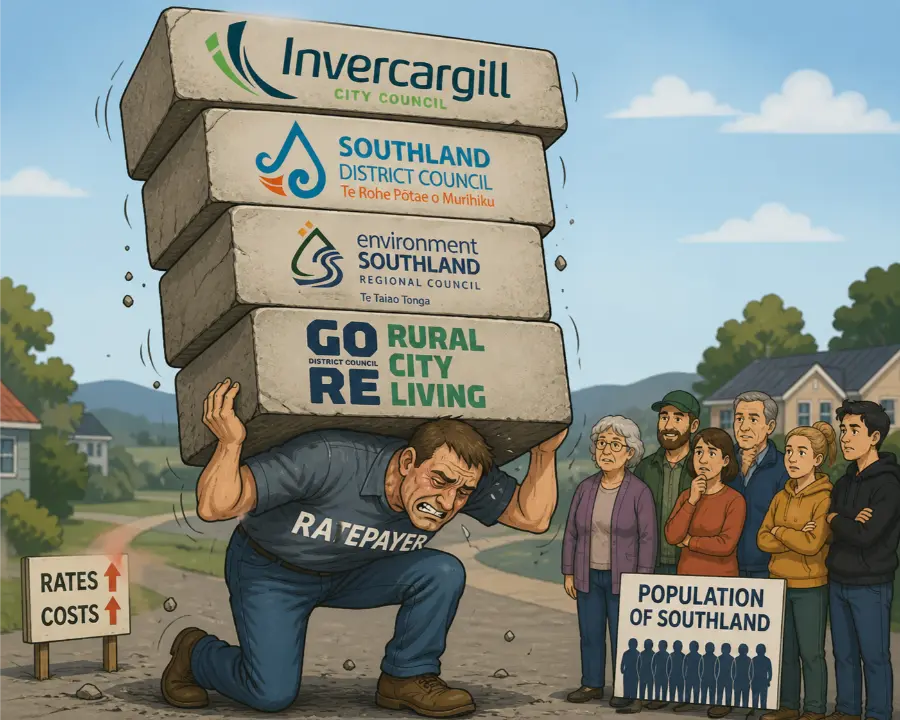
Southern councils have three months to come up with their own amalgamation plans or face government-imposed changes, ministers announced Tuesday.
Local Government Minister Simon Watts and RMA Reform Minister Chris Bishop delivered the ultimatum, abandoning their previous approach of government-led Combined Territories Boards in favour of voluntary council groupings.
"Our message to councils is simple: lead your own reform, or we will do it for you. Either way, change is coming," Bishop said.
Watts made it clear proposals should focus on creating "larger, more efficient unitary authorities that streamline functions, reduce duplication, and improve decision-making".
For areas that fail to submit plans within three months, the government "will implement a backstop process to ensure reform still happens across the country".
"This will involve a standardised approach, including transitional governance arrangements while changes are put in place," Watts said.
The ministers said they don't have a specific target number of councils, with decisions to be made this year, developed in detail and signed off in 2027 for implementation before the 2028 local elections.
"Put it this way, regional councillors will not be elected at the 2028 local body elections," Bishop said.
Southland councils are already mobilising in response. Environment Southland chair Jeremy McPhail said the region has "a limited window to determine its future".
"For Southland, the key question is whether we shape that change ourselves, or have it shaped for us," McPhail said. "It's up to us, as Southland councils, to work closely together to develop a proposal that reflects our region's unique communities, geography, and economy."
McPhail said the Local Government Commission process already underway in Southland remains relevant, and they await government advice on how the two processes will align.
"It is disappointing that regional councils have been excluded from putting forward any change proposals, but that won't stop us from advocating for what's best for the region," he said.
Across Otago, mayors are also preparing. A joint statement from southern mayors, including Dunedin's Sophie Barker and Queenstown-Lakes' John Glover, said amalgamation talks were already underway.
"The topic of amalgamation has already been front of mind for all Mayors and senior staff at councils across Otago and has been raised in conversation at the Otago Mayoral Forum," they said.
Bishop said about 1150 groups and individuals provided feedback after November's announcement, showing "strong support for change".
"I expected kind of all hell to break loose and everyone to go bananas, and actually what's happened is the opposite, is people have gone 'oh, fantastic, you guys are up for change, so are we'," he said.
Several regional groupings are already looking at amalgamation, including Northland, Waikato, Bay of Plenty, Wellington, Wairarapa, and Hawke's Bay.
New Zealand currently has 78 councils across three types: regional councils, city and district councils, and unitary authorities like Auckland's supercity.
Bishop dismissed concerns about the tight timeframe: "Three months is more than enough time."
Labour's local government spokesperson Tangi Utikere called the approach "messy" and "watered down", saying the government should fund councils properly rather than forcing reorganisation.
Decisions will be made this year, with detailed development and sign-off in 2027 for implementation before the 2028 elections.